
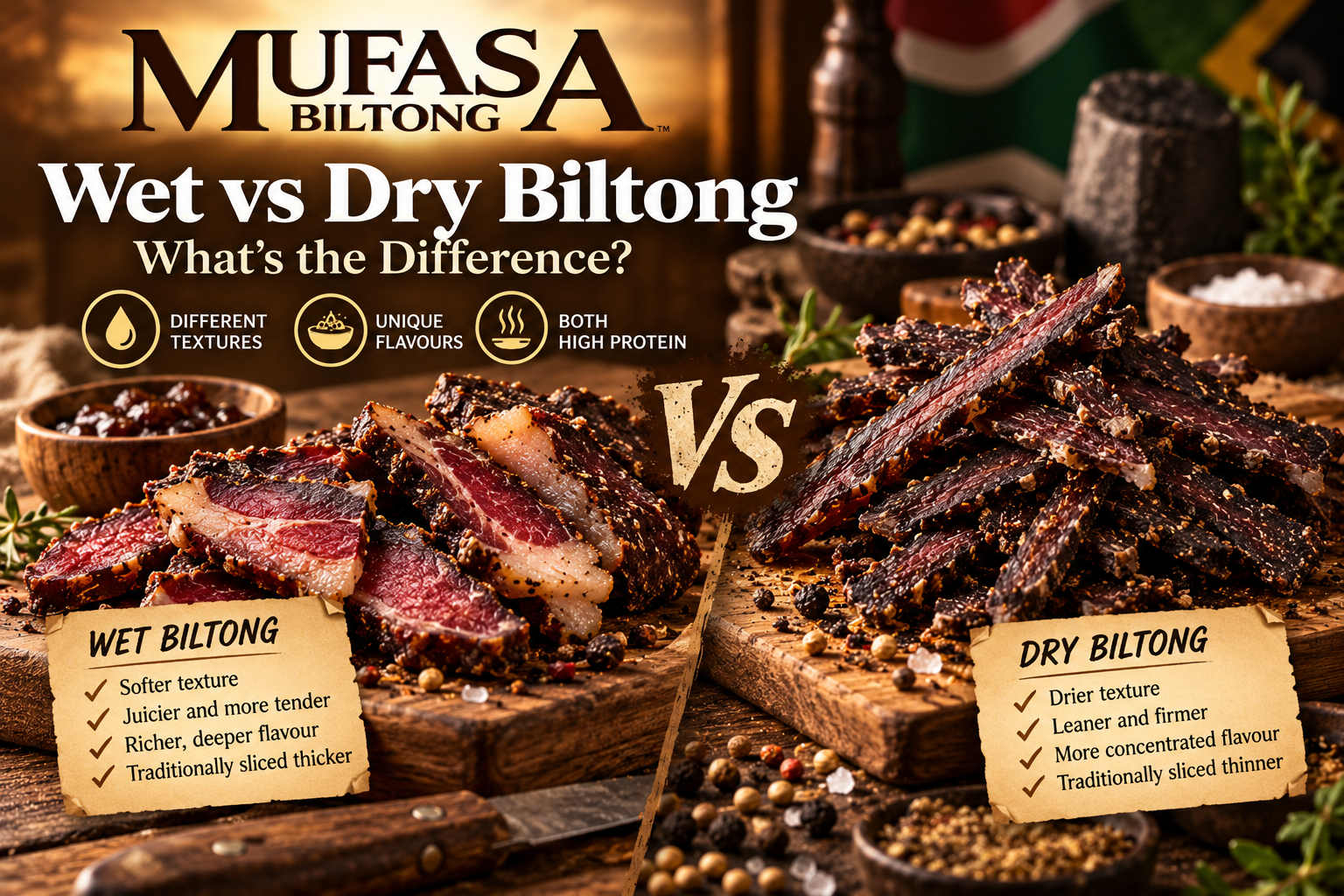
Biltong comes in different textures, from softer pieces with a moist centre to firmer slices that have been dried for longer. If you are deciding between the two, understanding wet vs dry biltong can help you choose a style that suits your taste, preferred texture and snacking habits.
Biltong is a traditional Southern African dried meat snack commonly made using beef, vinegar, salt and spices. The meat is seasoned and air-dried, with the drying process influencing its final texture and moisture level. The exact result depends on factors such as the cut of meat, thickness, recipe, drying conditions and the producer’s preferred finish.
Understanding wet vs dry biltong makes it easier to compare products based on moisture, tenderness and chewiness rather than relying on the product name alone. Both styles have their own appeal, so the right choice comes down to your personal taste and preferred texture. Wet biltong is generally softer and more yielding, while dry biltong is typically firmer and chewier. Neither style is automatically better. Your ideal choice depends on whether you enjoy a tender bite, a more substantial chew or something in between.
In this guide, we explain seven important differences, discuss flavour and preparation, and share practical tips for choosing and storing biltong responsibly.
1. Wet vs Dry Biltong: Understanding the Main Difference
When comparing wet vs dry biltong, look at how firm the meat feels, how easily it breaks apart and whether you prefer a softer centre or a longer chew. These characteristics can help you identify your preferred style, although individual products will vary according to the cut of meat and drying method. The most noticeable difference between wet and dry biltong is its texture, which is closely related to how much moisture remains after drying.
Wet biltong usually refers to meat that has been dried for a shorter period or finished with a higher moisture content. It tends to feel softer and may have a more tender centre. Depending on the cut and thickness, it can be easier to bite through and may feel juicier than a drier variety.
Dry biltong has generally undergone more drying, producing a firmer texture and a more pronounced chew. It may be darker or feel harder than a wetter style, although colour alone cannot tell you exactly how moist a product is.
These terms describe common texture preferences rather than a universal technical classification. Producers may use different methods, and products labelled wet or dry can still vary considerably.
When comparing products, pay attention to the manufacturer’s description and, where possible, look at the actual cut or sample. The name alone does not tell you everything about the finished texture, ingredients or storage requirements.
2. Compare Texture and Chewiness
One of the easiest ways to compare wet vs dry biltong is to consider how much chewing you prefer. A softer variety may be easier to bite through, while a firmer variety can provide a more substantial chew. Neither texture is automatically better quality; both can appeal to different tastes. Texture is often the deciding factor when choosing between wet and dry biltong.
What is wet biltong like?
Wet biltong is generally softer, more flexible and less firm to bite. Some people prefer it because it can feel tender and requires less chewing. A thicker slice may have a noticeably softer centre, depending on how it was prepared.
This style may appeal to people who enjoy a less rigid snack or want to experience the meat’s texture without a particularly firm chew. However, softness varies from product to product, so it is best not to assume that every wet variety will have the same consistency.
What is dry biltong like?
Dry biltong is typically firmer and chewier. The additional drying can create a denser bite that takes longer to work through. Some snackers enjoy this because the texture makes a small portion feel substantial.
Very dry pieces can be harder to chew, especially if they are thick or contain tougher muscle fibres. If you prefer a gentler bite, consider a less-dry variety or thinner slices.
Neither texture indicates quality on its own. Good biltong can be prepared to suit different preferences, and the best choice is the one you enjoy eating.
3. How Moisture Influences Taste
The flavour difference between wet vs dry biltong is not determined by moisture alone. Seasonings, vinegar, salt, meat cut and preparation all contribute to the final taste. If you prefer a particular flavour profile, compare the ingredients and seasoning descriptions alongside the texture. Moisture can influence how you experience the flavour of biltong, although it is only one part of the picture.
A wetter piece may feel softer and allow its seasoning and meat flavours to be experienced alongside a more tender texture. Some people describe this as a fuller or juicier eating experience.
Dry biltong can feel more concentrated because more moisture has been removed. The seasoning may seem more pronounced in each bite, and the firmer texture encourages slower chewing.
However, drying does not automatically make biltong more flavourful. The result also depends on the meat cut, seasoning blend, vinegar, salt, spices and production method. Two products with similar moisture levels can taste very different if their recipes are different.
If flavour is your main priority, compare the seasoning and ingredient lists as well as the texture. A peppery variety, for example, may taste quite different from a milder recipe regardless of whether it is wet or dry.
The easiest way to find your preference is to sample different styles when possible and note which balance of seasoning, tenderness and chew you enjoy most.
4. Understand the Role of Meat Cuts and Slicing
The cut of meat can make a significant difference to the eating experience. Muscle structure, fat content and the direction of slicing all affect how tender or chewy a piece feels.
Some cuts naturally have more connective tissue or firmer muscle fibres. These can feel chewier, particularly when the biltong is sliced thickly or dried to a firmer finish.
Slicing also matters. Thin pieces may be easier to bite and chew, while thicker cuts can provide a more substantial texture. Even a relatively moist piece may feel firm if it contains tougher fibres.
When comparing wet and dry biltong, remember that the drying level is not the only factor at work. A softer piece may owe some of its tenderness to the cut and slicing method, not simply to moisture.
If you are ordering online, read the product description carefully. Look for information about the cut, texture and slice style where provided. If the description does not answer your questions, contact the seller rather than assuming every variety uses the same meat or preparation method.
5. Which Style Is Better for Different Snacking Occasions?
Your preferred texture may depend on when and how you plan to enjoy your biltong.
Wet biltong may suit people who prefer a softer bite and a more tender texture. It can be appealing as part of a savoury snack plate or when you want a less-firm eating experience.
Dry biltong may suit people who enjoy a longer chew and a firmer texture. Some prefer it for a small snack during a busy day because the denser bite feels satisfying to them.
You can also consider how you intend to serve it. Thinly sliced biltong can work well alongside cheese, crackers or other snack foods, depending on your preferences. Small pieces can also be added to a snack platter for sharing.
There is no universal rule that one style is better for travel, work or outdoor activities. The right choice depends on the particular product’s packaging, storage directions and handling requirements, not simply whether it is wet or dry.
For office snacks, picnics or travel, check whether the product requires refrigeration and how soon it should be consumed after opening. Follow the label instructions even if the biltong feels dry.
6. Check Nutrition, Ingredients and Product Information
Although wet and dry biltong are both dried meat products, you should not assume their nutritional values are identical.
Moisture affects the concentration of nutrients by weight. A drier product may contain more protein per 100 grams simply because it contains less water. However, the actual figures depend on the meat, recipe and production method.
If nutrition is important to your decision, compare the information on each product’s label. Look at protein, energy, sodium and carbohydrates, and compare values per 100 grams before considering your usual serving size.
Salt is commonly used in biltong production, so sodium is particularly worth checking if you monitor your intake. Some recipes may also contain sugar or other additions. Read the ingredient list rather than assuming that every biltong variety has the same recipe.
If you have specific dietary requirements, check allergen information and contact the manufacturer if any ingredient or handling detail is unclear.
You can learn more about packaged food labelling from Food Standards Australia New Zealand (FSANZ).
Most importantly, do not use texture as a safety test. A soft product is not necessarily unsafe, and a very dry product is not automatically safe for every storage situation. Follow the producer’s directions and check the current packaging.
7. Storage: Why You Should Follow the Label
Storage is an important consideration when choosing between wet and dry biltong. Products with different moisture levels may have different handling requirements, but the words wet and dry alone are not enough to determine how a product should be stored.
Always read the packaging for refrigeration instructions, storage conditions, use-by dates and advice for after opening. Follow those directions even if you have previously bought a similar style from another producer.
Once a packet is opened, handle the product as instructed and keep it protected from contamination. Use clean hands or utensils when serving it, and reseal the packaging appropriately if the manufacturer recommends doing so.
Do not assume that dry biltong can be kept at room temperature indefinitely. Drying methods, packaging, product formulation and handling conditions all affect storage requirements.
Likewise, do not leave a wetter product unrefrigerated if its label says refrigeration is required. If the product has been stored incorrectly, its appearance and smell alone cannot reliably establish that it is safe to eat.
If you are unsure about storage or the product’s condition, contact the manufacturer and follow its advice. Choosing the right texture should always go hand in hand with safe handling.
Wet vs Dry Biltong: A Quick Comparison
For a quick wet vs dry biltong comparison, remember that the terms usually describe the finished texture and moisture level, not a universal quality grade. Check the product description and packaging to understand the specific variety you are considering.
| Feature | Wet biltong | Dry biltong |
|---|---|---|
| Typical texture | Softer and more yielding | Firmer and chewier |
| Moisture | Generally higher | Generally lower |
| Eating experience | Often a more tender bite | Often a longer, more substantial chew |
| Flavour experience | Depends on recipe and moisture | May taste more concentrated, depending on the recipe |
| Best choice | People who prefer softer textures | People who prefer firmer textures |
| Storage | Follow the specific product label | Follow the specific product label |
These are general comparisons, not guarantees. Individual products can differ according to their ingredients, cut, thickness and preparation method.
Frequently Asked Questions
Is wet biltong better than dry biltong?
Neither is universally better. Wet biltong is usually softer, while dry biltong tends to be firmer and chewier. Your preference depends on the texture and eating experience you enjoy.
Does dry biltong have more protein than wet biltong?
It can have more protein per 100 grams because it generally contains less moisture, which concentrates the remaining nutrients by weight. However, the exact amount varies by product. Compare the nutrition information panels for an accurate comparison.
Is wet biltong safe to eat?
Commercial wet biltong should be produced and handled appropriately, but you should always follow the product’s storage instructions and use-by date. Higher moisture does not by itself tell you whether a product is safe.
Can I store dry biltong outside the refrigerator?
Only if the product’s packaging or manufacturer specifically permits that storage method. Dryness alone does not guarantee that refrigeration is unnecessary.
Which type of biltong should a beginner try?
If you are new to biltong, consider starting with a texture you already enjoy in other foods. Choose a softer style if you prefer tender meat, or a drier style if you like a firmer chew. Trying a small amount of each is a practical way to compare them.
Final Thoughts
Choosing between wet and dry biltong comes down to personal preference. Wet biltong generally offers a softer bite and a more yielding texture, while dry biltong tends to be firmer and chewier. Meat cuts, slicing, seasoning and preparation also influence the final result.
When comparing wet vs dry biltong, consider more than texture alone. Review the ingredients, nutrition information, packaging and storage directions to understand what you are buying.
Ultimately, wet vs dry biltong is a matter of personal preference. Compare texture, flavour, ingredients and storage instructions to find a product that suits your needs, and always follow the manufacturer’s guidance for safe storage.
Explore the options available at Mufasa Biltong and use the product descriptions to help identify the style that suits your preferences. With a little comparison, you can find the biltong texture you enjoy most while making informed choices about ingredients and storage.