
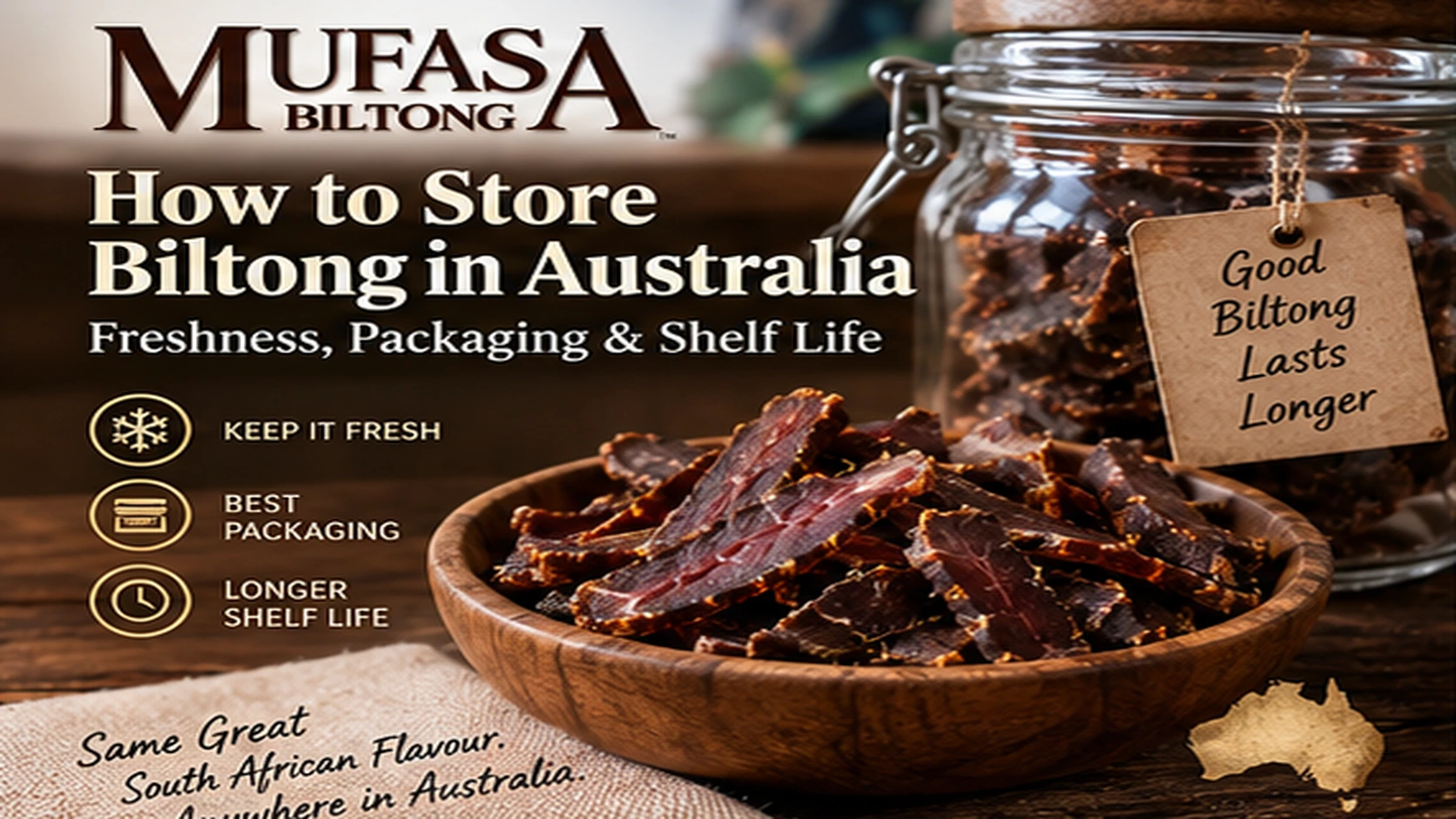
Why Proper Biltong Storage Matters
Biltong is made to be enjoyed for its rich savoury flavour, firm texture and distinctive South African character. Although drying removes much of the moisture found in fresh meat, storage still matters once the product is packaged or opened. Heat, humidity, air exposure and condensation can all affect the eating quality of dried meat.
This is particularly relevant in Australia, where temperatures and humidity can vary significantly between regions and seasons. A pack that is handled differently in a cool Perth home may need more attention during a hot journey or after being opened. The simplest approach is to treat storage as part of enjoying the product: keep it protected from excess moisture and heat, minimise unnecessary exposure to air and follow the storage directions supplied with the product.
Start With the Product Label
There is no single storage rule for every type of biltong. Sliced biltong, biltong sticks, flavoured bites and droëwors can have different packaging and product characteristics. The manufacturer’s label should therefore be your first reference for storage, use-by information and handling after opening.
Mufasa Biltong’s range includes sliced biltong, Pepper Sticks, Bacon Biltong, Garlic Bites, Chilli-Garlic Bites, Chutney Wheels and traditional or chilli droëwors. Because the range is varied, customers should check the instructions supplied with the particular product rather than applying one storage method to everything.
How to Store Unopened Biltong
If the package is unopened, keep it in the conditions stated on the label and away from direct sunlight, excessive heat and unnecessary moisture. A cool, dry storage area is generally the starting point for dried meat products when the packaging permits room-temperature storage.
Avoid leaving a sealed pack in a hot car, near a cooking appliance or in direct afternoon sun. Temperature swings can also create condensation when a cold product is moved into a warm environment. If you are ordering online, bring the parcel inside when it arrives and store the product according to its packaging instructions.
How to Store Opened Biltong
Once a packet is opened, handling becomes more important. Reseal the package properly or move the biltong into a suitable food-safe container if the original packaging cannot be closed securely. Keep the product away from steam, splashes and damp areas such as beside a kettle or sink.
Try to take out only the amount you intend to eat and return the rest to storage promptly. Repeatedly leaving a packet open exposes the biltong to air and humidity and can gradually change its texture. Clean, dry handling also helps reduce unnecessary moisture during serving.
What About the Fridge?
Refrigeration can be useful in some circumstances, but it should not automatically be treated as the best option for every biltong product. Packaging, moisture levels and the manufacturer’s instructions all matter. A very cold product moved into a warm, humid environment can also experience condensation.
If the product instructions recommend refrigeration after opening, follow them and keep the package well protected from moisture and strong-smelling foods. If refrigeration is not recommended, use the storage conditions stated on the label instead. When in doubt, contact the retailer or manufacturer before changing the recommended storage method.
Can You Freeze Biltong?
Freezing may be appropriate for some packaged dried-meat products when longer storage is required, but the product should be packaged correctly and the manufacturer’s guidance should be followed. Poorly protected food can suffer from freezer burn or moisture problems.
If freezing is recommended, use secure packaging designed for freezer storage and label the pack with the date. Thaw gradually according to the product guidance rather than using a microwave or exposing the meat to direct heat. Once thawed, handle and store the product according to the instructions provided.
How to Recognise Storage Problems
Good storage should preserve the product’s expected smell, appearance and texture. If you notice an unusual sour or unpleasant odour, unexpected sliminess, damaged packaging or visible mould, do not rely on internet tips to decide whether the food is safe. When a product appears spoiled or its safety is uncertain, the safer choice is to discard it and contact the seller if appropriate.
Remember that natural variation in colour and texture can occur in dried meat, especially between leaner and fattier products. The important point is to compare the product with its expected condition and the information supplied by the producer.
Buying Biltong Online in Australia
Storage starts before the packet reaches your kitchen. If you order biltong online, plan to bring the parcel indoors promptly and avoid leaving it in direct sun or a hot vehicle. Mufasa Biltong offers selected dried-meat products for online customers across Australia, alongside Perth stores for customers who prefer to shop locally.
The current range includes traditional biltong as well as sticks, flavoured bites and droëwors, giving customers different formats for snacking and sharing. Product availability and delivery options can change, so check the current online shop before ordering.
Practical Storage Checklist
For everyday use, a simple checklist is often enough:
- Read the storage instructions before opening the pack.
- Keep biltong away from excessive heat, sunlight and moisture.
- Reseal opened packaging or use a clean, suitable food-safe container.
- Avoid unnecessary handling and repeated exposure to humid air.
- Follow any refrigeration or freezing instructions for the specific product.
- Check appearance, smell and texture before eating.
- When safety is uncertain, do not eat the product.
These habits are especially useful in warmer Australian weather, when storage conditions can change quickly.
How to Match Storage to Your Climate
Australia’s climate makes storage decisions more important than a one-size-fits-all rule suggests. In a cool, dry environment, the product may remain closer to the conditions intended by the producer. In a hot or humid environment, packaging and storage instructions deserve closer attention.
If your kitchen becomes warm during the day, choose a storage location away from ovens, windows and appliances that generate heat. In humid weather, minimise the time the package is left open. The goal is simply to keep the product in stable, suitable conditions.
What to Do When You Are Unsure
If you are uncertain about a product’s storage requirements, check the label first and contact the retailer or manufacturer if the information is unclear. This is safer than relying on a generic recommendation from a blog because different products can have different packaging, moisture levels and handling requirements.
For Mufasa Biltong customers, the current website provides product information and contact details, while the online shop shows the available product range. Keeping the original packaging is useful because it preserves the product name, batch information and storage instructions you may need later.
Final Takeaway
The best way to store biltong in Australia is to match the storage method to the product and its packaging. Keep it protected from excess heat and moisture, minimise air exposure after opening and follow the manufacturer’s instructions for refrigeration or freezing. With a little care, you can preserve the texture and flavour that make biltong such a popular South African snack.
Frequently Asked Questions
How should I store opened biltong?
Follow the product label first. In general, protect biltong from excessive heat, direct sunlight and moisture, and reseal opened packaging promptly.
Can biltong be refrigerated or frozen?
Only when the product’s instructions recommend it. Follow the specific storage guidance supplied with the product.
What are the signs that biltong should not be eaten?
Do not eat biltong if it has an unusual odour, unexpected sliminess, visible mould, damaged packaging or any other sign of spoilage.