
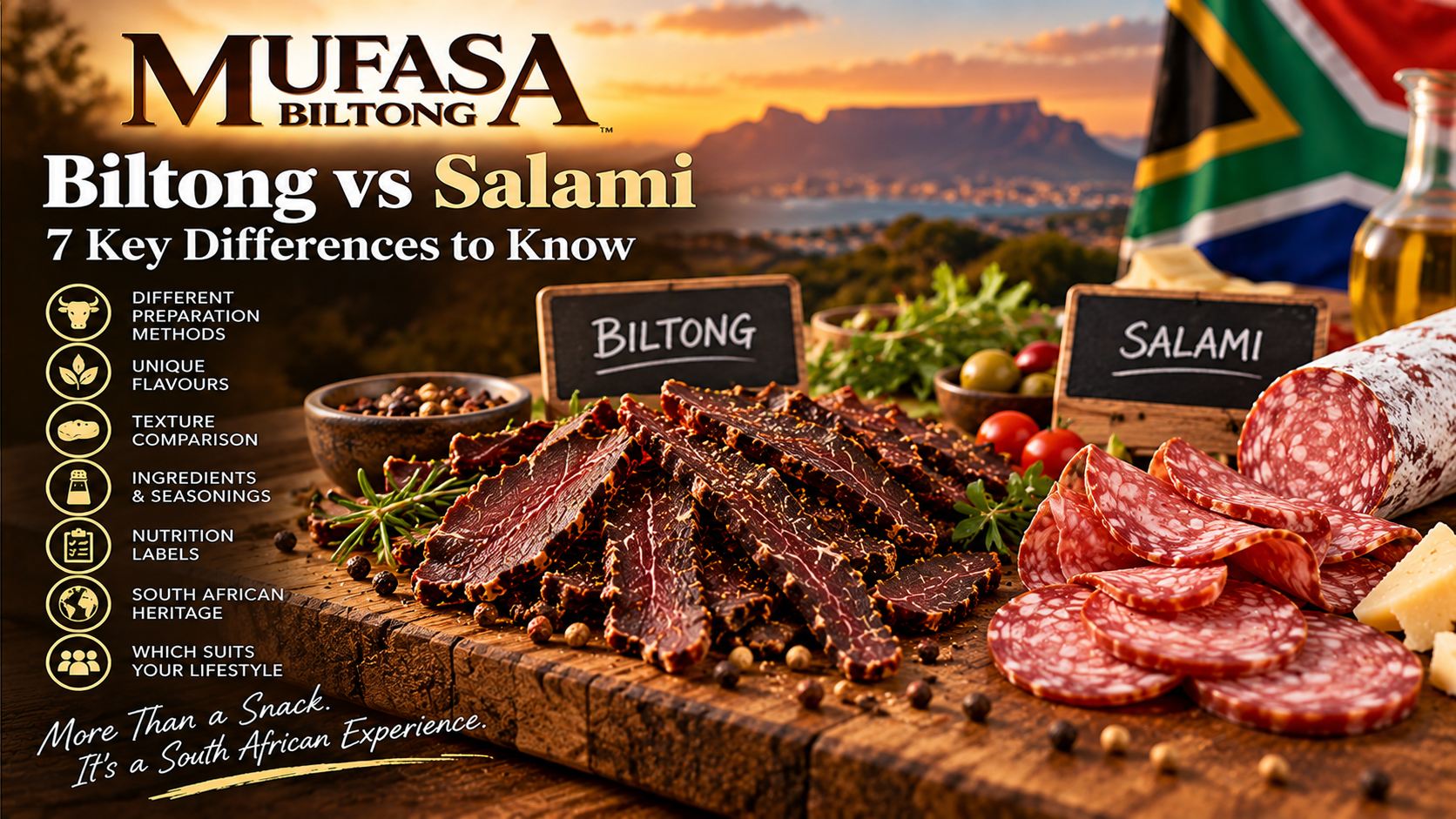
If you enjoy savoury meat snacks, you have probably come across both biltong and salami. They may look similar when sliced and served on a platter, but they are quite different products. Understanding biltong vs salami can help you choose the right snack for your taste preferences, cooking style and everyday occasions.
Biltong is a traditional South African dried meat product, commonly made from beef and seasoned with ingredients such as vinegar, salt, pepper and coriander. Salami, on the other hand, is generally a cured sausage made using seasoned meat and a fermentation and curing process. Recipes and production methods vary, so not every product will have the same ingredients or nutritional profile.
Whether you are discovering South African food or simply looking for something different to add to your snack selection, this guide explores seven important differences between biltong and salami.
Biltong vs Salami: What Is the Main Difference?
The biggest difference between biltong vs salami is how they are made.
Biltong is traditionally prepared by seasoning strips of meat and allowing them to air-dry under controlled conditions. The meat is generally cut into pieces before drying, which gives biltong its characteristic appearance and texture.
Salami is usually made by combining minced or ground meat with seasonings and other ingredients, filling the mixture into a casing, and allowing it to cure. Many traditional salamis also undergo fermentation, which contributes to their distinctive tangy flavour.
Both products are designed to be preserved meat foods, but their ingredients, preparation methods and final textures are different.
Here are seven key differences worth understanding before deciding between biltong vs salami, which one you prefer.
1. Preparation Methods Are Different
One of the clearest differences in the biltong vs salami comparison is the preparation process.
Traditional biltong begins with cuts of meat, often beef, that are trimmed and cut into strips. These strips are seasoned, commonly with salt, vinegar, pepper and coriander, before being hung to dry. The drying process reduces moisture and develops the firm, chewy texture associated with biltong.
Salami is made differently. Meat is generally minced or ground and mixed with seasonings, salt and other ingredients. The mixture is placed into a casing and cured. Many salamis are fermented using starter cultures, although methods vary between styles.
The two products therefore have different structures from the beginning. Biltong retains the appearance of a piece of meat, while salami is made from a prepared meat mixture.
If you enjoy understanding where your food comes from, learning about these preparation methods is a useful way to appreciate the differences between the two snacks.
2. Biltong and Salami Have Different Flavour Profiles
Flavour is another important part of choosing between biltong vs salami.
Traditional biltong has a rich, savoury beef flavour. Its seasoning often includes coriander and black pepper, with vinegar contributing a distinctive tang. Depending on the recipe, biltong may also have garlic, chilli or other flavourings.
Salami has a different taste. Its flavour can be savoury, salty, tangy or mildly spicy, depending on the meat, curing method and seasoning blend. Some varieties contain garlic, paprika, pepper or other spices.
When considering biltong vs salami, think about the flavours you usually enjoy:
- Biltong: Often has a pronounced beef flavour with peppery, coriander and savoury notes.
- Salami: Commonly offers a seasoned, cured-sausage flavour, which may be tangy or spicy.
- Flavoured varieties: Both products can offer different seasoning combinations, so check the product description before buying.
Neither flavour is automatically better. Your preference will depend on whether you enjoy the taste of seasoned dried beef or the more complex flavour of cured sausage.
3. Texture and Appearance Set Them Apart
Texture can make a significant difference to your snacking experience.
Biltong is usually recognisable by its long or sliced pieces of dried meat. Depending on how it is cut and dried, it can be soft and relatively easy to chew or firm and more substantial. The grain of the meat is often visible, giving it a natural, fibrous appearance.
Salami usually has a smoother, more compact texture because it is made from minced or ground meat. When sliced, it typically displays a uniform interior, sometimes with visible pieces of fat and seasoning.
Here is a simple comparison:
| Feature | Biltong | Salami |
|---|---|---|
| Structure | Whole pieces or strips of meat | Minced or ground meat mixture |
| Appearance | Visible meat fibres | Compact, uniform slices |
| Texture | Chewy to firm, depending on drying | Usually firm but can be softer |
| Serving style | Strips, slices, sticks or bites | Usually sliced rounds or pieces |
The texture you prefer may depend on how you like to snack between biltong vs salami. Biltong offers a more recognisable dried-meat texture, while salami provides the familiar bite of a cured sausage.
4. Ingredients and Seasonings Can Vary
Ingredients are worth checking whenever you compare packaged meat snacks.
Traditional biltong recipes often use meat, salt, vinegar and spices. However, commercial recipes can differ. Some products may include additional seasonings, preservatives or other ingredients, depending on the manufacturer and product type.
Salami recipes also vary considerably. They commonly include meat, salt, spices and curing ingredients. Some varieties may include sugar, cultures, preservatives and other additives as part of their production process.
When comparing biltong vs salami, do not assume that every product follows the same recipe.
Instead, check the ingredient list and look for:
- The type of meat used.
- Added salt and seasoning ingredients.
- Preservatives or curing ingredients.
- Added sugar or other flavouring ingredients.
- Any allergens or ingredients you prefer to avoid.
If you have dietary requirements, the packaging is the most useful starting point. Product names and general descriptions are not substitutes for checking the actual ingredients.
For Australian shoppers, the Food Standards Australia New Zealand (FSANZ) food labelling resources provide useful information about understanding packaged food labels.
5. Nutrition Depends on the Individual Product
Nutrition is an area where it is particularly important to compare actual product labels rather than rely on general assumptions.
Both biltong and salami provide protein because they are meat-based foods. However, their nutritional values can differ depending on the meat used, fat content, moisture level, serving size and manufacturing process.
Some biltong products are made using relatively lean cuts, while others contain more fat. Salami varieties can also differ significantly in fat content and ingredients.
Salt is another consideration. Both products may contain substantial sodium, depending on how they are prepared and seasoned.
When comparing the nutritional information, look at:
- Protein: Compare the amount per 100g rather than relying on front-of-pack claims.
- Energy: Check kilojoules or calories for the same serving size.
- Fat: Consider both total fat and saturated fat.
- Sodium: Compare the salt content, especially if you monitor your sodium intake.
- Serving size: A small snack portion may look very different from a 100g comparison.
The best approach to biltong vs salami nutrition is to compare the exact products you are considering. Two biltong products can differ from each other just as much as two salami products.
6. They Have Different Food Traditions and Heritage
Biltong has strong roots in South African food culture. It is closely associated with traditional meat-preservation practices and is enjoyed as a snack in homes, during travel and at social gatherings.
For many South Africans living in Australia, biltong is more than just a convenient food. It can be a reminder of familiar flavours, family traditions and the experience of sharing food with friends.
Salami has a different culinary history, with many varieties associated with European meat-curing traditions. Different regions have developed their own recipes, seasonings and styles.
This heritage influences how people enjoy the products today.
Biltong is often eaten on its own, shared during a gathering or included on a grazing board. Salami is commonly used in sandwiches, antipasto platters, pizzas and other dishes.
Both biltong vs salami have a place in modern food culture, but they bring different traditions and flavours to the table.
7. Which Snack Suits Your Lifestyle?
The final difference comes down to how you plan to enjoy your snack.
Biltong is convenient for people who enjoy dried meat in strips, slices, sticks or bite-sized pieces. It can be packed for a trip, kept handy for a snack break or served as part of a sharing platter. Always follow the storage instructions on the product packaging.
Salami is versatile in a different way. It is often used in sandwiches, lunchboxes, antipasto platters and recipes. Its sliced format makes it easy to add to a range of savoury meals.
Here are a few situations to consider:
For a quick savoury snack: Biltong can be a convenient option when you enjoy the flavour and texture of dried beef.
For sandwiches and wraps: Sliced salami is a familiar choice for adding a cured-meat flavour to bread and wraps. Biltong can also be used creatively in sandwiches, depending on the variety and texture.
For entertaining: Both products can be served on a grazing board with cheese, crackers, olives and other accompaniments.
For South African-inspired flavours: Biltong is an excellent choice if you want to enjoy a traditional South African-style snack.
When comparing biltong vs salami for everyday use, consider the taste you prefer, the way you plan to serve it and the product’s storage instructions.
Can You Serve Biltong and Salami Together?
Absolutely. You do not have to choose only one.
Serving biltong and salami together can create an interesting grazing board because the two products offer different textures and flavours. Biltong brings a distinctive dried-beef character, while salami adds the familiar taste of cured sausage.
For a simple sharing platter, combine:
- Sliced traditional biltong.
- A few slices of salami.
- Mild or mature cheese.
- Crackers or crispbreads.
- Olives and pickles.
- Fresh grapes or sliced apple.
- A small bowl of chutney or relish.
Arrange the meats separately so guests can easily identify each option. You can also add small labels to help people understand what they are tasting.
If you are hosting guests with dietary restrictions, check the ingredients of biltong vs salami and keep foods with potential allergens separate.
Frequently Asked Questions
Is biltong the same as salami?
No. Biltong is traditionally made by seasoning and drying strips of meat, while salami is generally made from minced or ground meat that is seasoned and cured, often through fermentation.
Which tastes better, biltong or salami?
That depends on personal preference. Biltong usually has a distinctive seasoned beef flavour, while salami has the flavour profile of a cured sausage. Trying both is the best way to decide which you prefer.
Is biltong healthier than salami?
There is no universal answer. Nutritional values vary between products. Compare protein, energy, fat and sodium on the nutrition panels before making a choice.
Can I use biltong instead of salami on a platter?
Yes. Biltong can be served on a grazing board alongside cheese, crackers, fruit, olives and dips. Its texture and flavour provide a different experience from sliced salami.
Does biltong contain preservatives?
This depends on the product and its recipe. Some biltong products may contain additional ingredients or preservatives, while others use a simpler ingredient list. Always check the packaging.
How should I store biltong and salami?
Follow the storage instructions on each product’s packaging. Different products have different moisture levels, packaging and storage requirements, so do not assume they should be stored in the same way.
Discover the Difference With Mufasa Biltong
Biltong and salami are both enjoyable savoury meat snacks, but their preparation, texture, flavour and culinary traditions make them quite different.
Understanding biltong vs salami helps you make a more informed choice based on what you enjoy. If you prefer the rich, seasoned taste and distinctive texture of traditional South African dried meat, biltong is well worth exploring.
Whether you enjoy it as an everyday snack, add it to a grazing board or share it with friends, biltong brings a taste of South African food culture to your table.
Explore the range at Mufasa Biltong and discover a selection of biltong options for your next snack or gathering.