
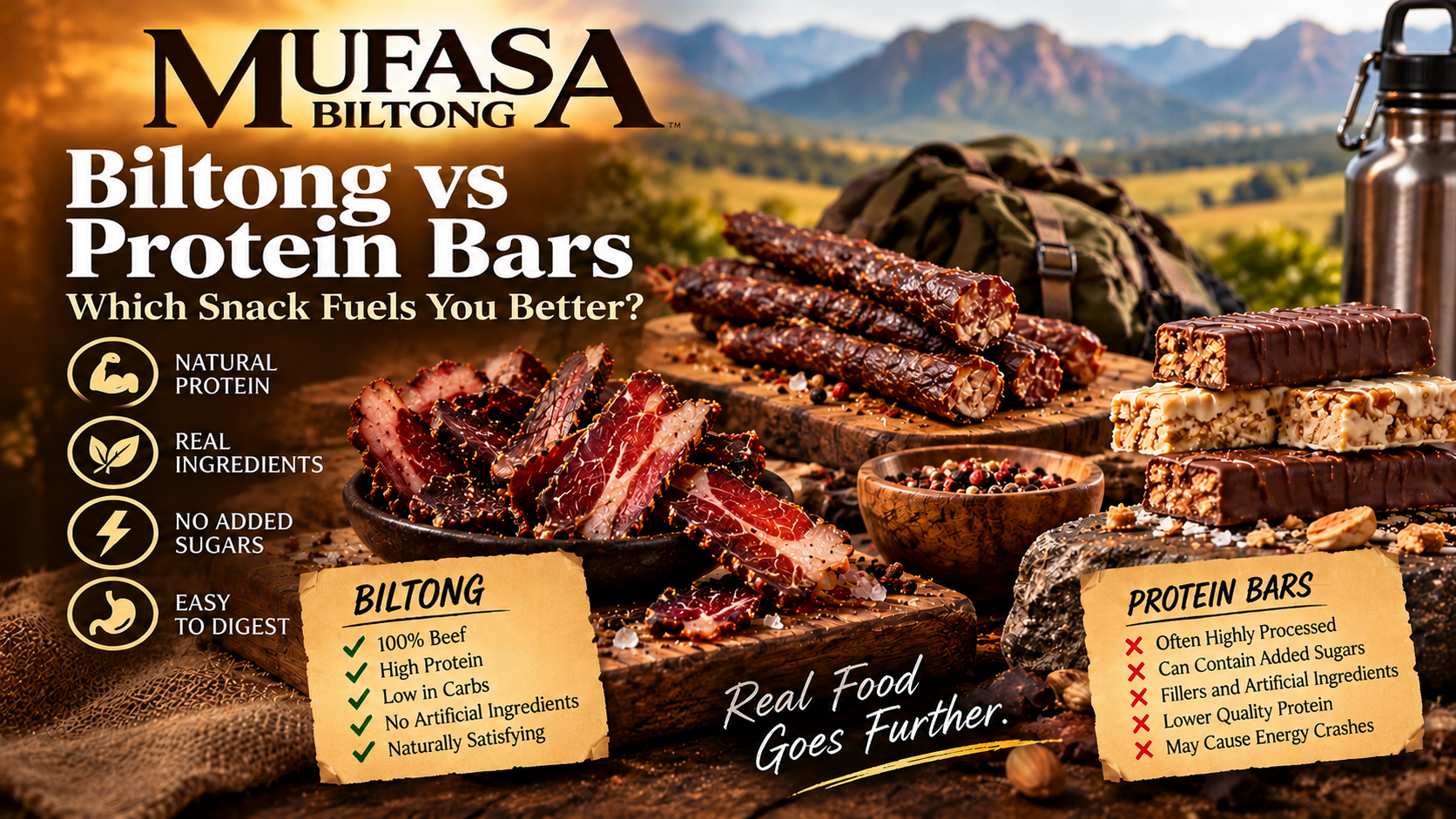
When comparing biltong vs protein bars, the best choice depends on your taste preferences, nutritional needs, ingredients and daily routine. Biltong is a savoury dried-meat snack, while protein bars are packaged snacks that can contain a range of protein sources, sweeteners and other ingredients. Understanding these differences can help you compare products and choose an option that suits you.
Biltong vs Protein Bars: 7 Important Things to Compare
The biltong vs protein bars comparison involves more than deciding which snack contains more protein. Products vary in serving size, ingredients, sodium, carbohydrates, taste and convenience. Compare the nutrition panels and ingredient lists of the actual products you are considering rather than assuming every biltong or protein bar has the same nutritional profile.
1. Protein content
Both biltong and protein bars can provide protein, but the amount depends on the specific product and serving size. Check the protein figure on each nutrition information panel and compare products on the same basis, such as per 100 grams. Then consider how much you would normally eat in one sitting.
2. Sugar and carbohydrates
Some protein bars contain added sugars, syrups or other sweeteners, while biltong recipes vary according to their seasonings and ingredients. Neither category is automatically sugar-free. If you monitor carbohydrate or sugar intake, review the nutrition panel and ingredient list before making a choice.
3. Sodium and salt
Salt is commonly used when making biltong, so sodium is worth checking, particularly if you are monitoring your salt intake. Protein bars can also differ in sodium content. Compare the figures per serving and per 100 grams instead of relying on the product category alone.
4. Ingredients and processing
Biltong is typically made from seasoned, dried meat, although recipes differ. Protein bars can include protein concentrates, nuts, cereals, sweeteners, flavourings and other ingredients. Read the full ingredients list to identify anything you prefer to avoid, and check allergen information when necessary.
5. Taste and texture
Biltong offers a savoury, meaty flavour and a chewy texture. Protein bars are available in a wide range of flavours and may be soft, crunchy or coated. Your preference may depend on whether you want a savoury snack or something sweeter.
6. Portability and convenience
Both options can be convenient when you are away from home. Individually packaged bars are easy to carry, while packaged biltong can also fit into a work bag or lunchbox. Always follow the product’s storage instructions, especially after opening.
7. Price and serving size
Compare the cost per serving rather than just the price of the packet. Check how many servings each package contains and whether the portion size matches what you would realistically eat. This gives you a more useful comparison of value.
Which Snack Fits Your Routine?
In the biltong vs protein bars decision, consider when you plan to eat the snack. Biltong may appeal when you want a savoury option during a work break, on a road trip or between activities. A protein bar may suit situations where you prefer a sweet flavour or a compact, individually portioned product.
Neither snack is automatically the healthier choice for everyone. Your overall eating pattern, portion size, personal preferences and nutritional requirements all matter. If you have specific dietary needs, use the product label and seek qualified advice where appropriate.
How to Read Labels Before You Buy
Before choosing between biltong and protein bars, compare serving size, protein, energy, sodium, carbohydrates and sugars. Review ingredients and allergen statements as well. Products marketed as high-protein can still differ substantially in their overall nutritional profiles.
For Australian packaged foods, consult Food Standards Australia New Zealand’s food labelling information. Use the information on the current package as your main guide, because recipes and formulations may change.
Frequently Asked Questions
Is biltong better than protein bars?
Neither is universally better. Biltong is a savoury dried-meat snack, while protein bars come in many formulations and flavours. Compare nutrition information, ingredients, serving size and cost to decide which suits your needs.
Which has more protein: biltong or protein bars?
It depends on the products and the serving sizes being compared. Check the protein values on both labels and compare equivalent amounts for a fair assessment.
Is biltong lower in sugar than protein bars?
Some biltong products contain little or no sugar, but recipes vary. Some protein bars contain added sugars or sweeteners, while others have different formulations. Always check the label rather than assuming.
Can I eat biltong or a protein bar at work?
Either may be suitable as a convenient snack, depending on your preferences and the product’s storage requirements. Follow packaging instructions and consider portion size.
Final Verdict: Biltong vs Protein Bars
Ultimately, the biltong vs protein bars choice comes down to your preferences and the nutritional details of the products you buy. Compare protein, sugar, sodium, ingredients, serving size and price before deciding. Biltong may suit someone who prefers savoury dried meat, while a protein bar may appeal to someone who enjoys a sweet, ready-portioned snack.
Choose the option that fits your routine and dietary preferences, and explore Mufasa Biltong to discover the available biltong options.