
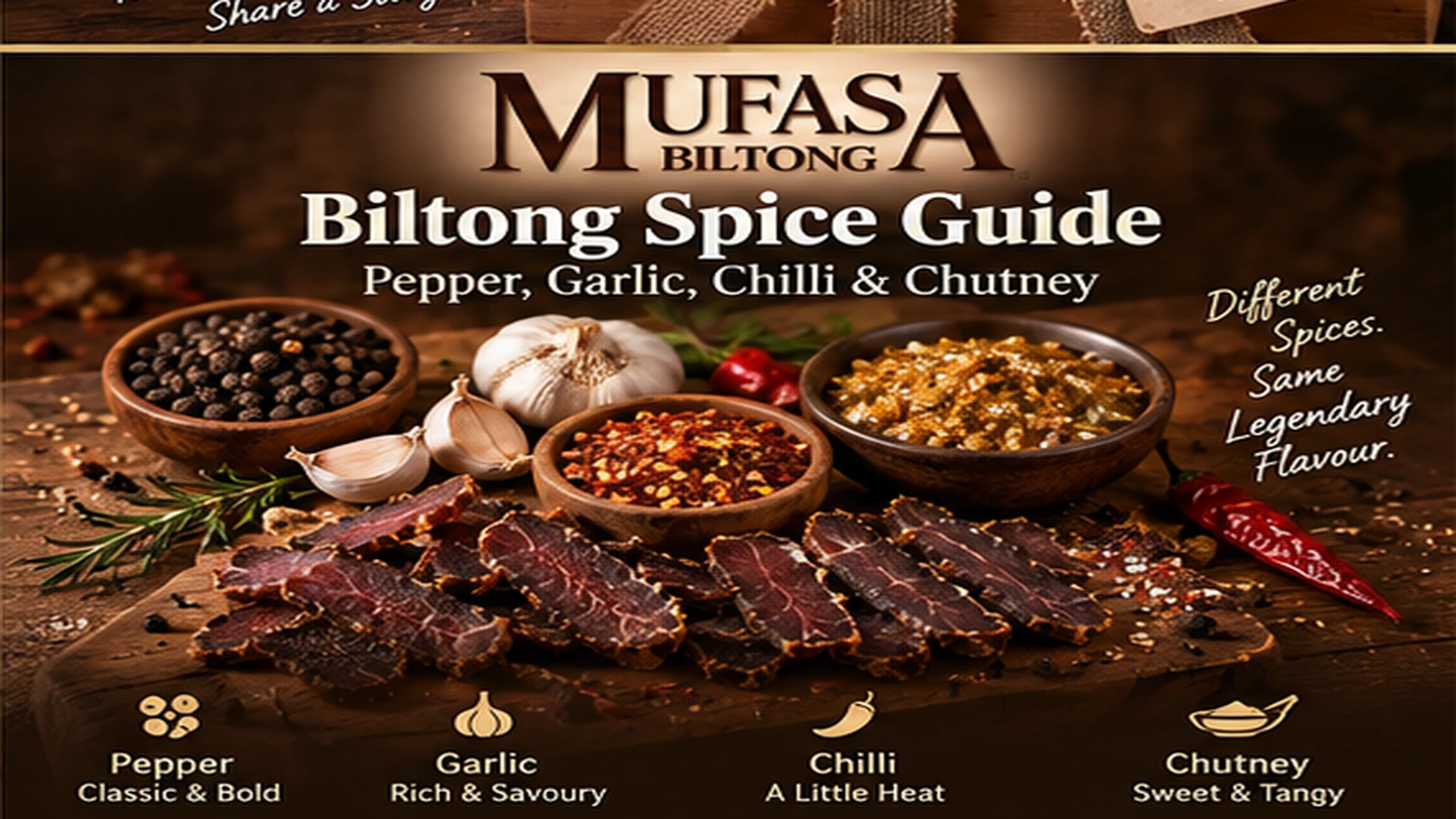
Why Spice Changes the Biltong Experience
The seasoning is one of the most noticeable ways to change the character of biltong. The underlying dried beef provides a rich savoury base, while spices and flavourings can add warmth, aroma, sweetness, acidity or heat.
That is why people searching for biltong spices in Australia often find that choosing a flavour is just as important as choosing the cut. A traditional pepper profile may appeal to someone who wants a classic taste, while garlic, chilli or chutney-style products can create a very different snacking experience.
Pepper: A Classic Savoury Profile
Pepper is closely associated with the familiar savoury character many people expect from biltong. It adds warmth and aroma without necessarily overwhelming the meat flavour, making it a useful choice for first-time buyers.
Mufasa Biltong currently lists Pepper Sticks in its online range. Sticks are also practical for casual snacking because they are easy to portion and share. If you are introducing someone to South African dried meat, a pepper-forward product can be a straightforward place to begin.
Garlic: Stronger Aroma and Depth
Garlic brings a distinctive savoury aroma and can make dried meat taste more pronounced. It suits people who enjoy bold seasoning and is particularly useful when you want something different from a straightforward pepper profile.
Mufasa lists Garlic Bites – Biltong Sticks among its current products. The bite-sized or stick-style format can work well for snack boxes, road trips and informal gatherings where people want to take a small portion at a time.
Chilli: Heat and Intensity
Chilli is for customers who enjoy a stronger finish. The experience can range from a gentle warmth to a much more noticeable heat depending on the product, so it is worth checking the product description and choosing according to your tolerance.
Mufasa’s current range includes chilli bites, chilli-garlic bites and chilli droëwors. These products can be useful for a tasting selection because they add a clear contrast to traditional or pepper-flavoured dried meats.
Chutney: A Different Direction
Chutney-style seasoning brings a different flavour idea to dried meat by combining savoury notes with a sweeter, tangier character. It can appeal to people who want to move beyond classic pepper and garlic profiles.
Mufasa currently lists Chutney Wheels among its online products. A chutney-flavoured option can be particularly useful in a mixed tasting box because it provides a noticeable contrast without relying on chilli heat.
How to Choose a Flavour
Think about the person eating the biltong rather than simply choosing the strongest flavour. For a first purchase, traditional or pepper is an approachable starting point. Garlic works for people who enjoy savoury intensity. Chilli is suited to heat lovers, while chutney offers a sweeter and tangier direction.
If you are buying for a group, choose contrasting profiles rather than several products that taste similar. One classic, one aromatic and one spicy or tangy option can create a simple tasting experience.
Biltong Spice Blends for Homemade Biltong
People searching for biltong spices in Australia may also be looking for ingredients to make biltong at home. Seasoning is important, but authentic biltong also depends on the meat, curing process, drying conditions and food-safety practices.
Mufasa has published guidance for customers interested in biltong spices and homemade preparation. If you make biltong at home, use a tested method, follow food-safety guidance and pay attention to drying conditions rather than treating the spice blend as the only important factor.
Build a Biltong Tasting Box
A simple tasting box can include four flavour directions: pepper, garlic, chilli and chutney. Keep portions relatively small so the recipient can compare them without getting overwhelmed. Add labels describing the flavour and heat level where known.
For a larger South African food gift, combine the tasting selection with droëwors, pantry favourites or other dried-meat formats. Mufasa’s current online range makes it possible to explore several product styles, although stock can change.
How to Read a Biltong Flavour Description
Product names can give you a useful first clue, but the description and ingredients provide more context. Look for words such as pepper, garlic, chilli, chutney, herb or smoky-style seasoning and consider how those flavours fit your usual preferences.
If you are buying for someone else, avoid assuming that a chilli label means the same level of heat across every product. Heat perception varies, so a classic flavour is usually the safer gift choice unless you already know the recipient enjoys spicy food.
Spice and Texture Work Together
Seasoning is only one part of the eating experience. Thin sticks and bites can feel different from sliced biltong, even when they use similar flavour profiles. Fat content, thickness and drying also influence how seasoning is perceived.
When building a tasting selection, change one variable at a time where possible. For example, compare a traditional biltong with a pepper product first, then compare a pepper product with chilli. This makes it easier to identify whether you prefer the seasoning, texture or both.
Choosing Ready-Made vs Homemade
There are two straightforward ways to explore biltong flavours in Australia. You can buy ready-made products and compare different seasonings without having to manage the drying process, or you can buy appropriate ingredients and make your own batches using a tested method.
Ready-made biltong is convenient when you want consistent results and minimal preparation. Homemade biltong can be rewarding for people who enjoy experimenting, but it requires careful attention to food safety and drying conditions.
Serving a Mixed Flavour Selection
For a tasting board, arrange flavours from familiar to stronger. Start with traditional or pepper, move to garlic, then finish with chilli or a chutney-style product. Serve small portions and give each product its own space so flavours do not blend together.
You can also add droëwors to the board to introduce a different shape and texture. Mufasa’s current range includes both biltong and dried-sausage products, making it possible to create a varied South African snack spread.
Final Takeaway
There is no single biltong spice that suits everyone. Pepper offers a familiar savoury profile, garlic adds aromatic depth, chilli brings heat, and chutney provides a sweeter, tangier contrast. Whether you are buying ready-made biltong or exploring spices for homemade batches, choosing flavours based on your taste preferences is the easiest way to build a more enjoyable biltong selection.
Frequently Asked Questions
What are common biltong flavours?
Pepper, garlic, chilli and chutney-style flavours are among the flavour directions available in Mufasa Biltong’s current range.
Which biltong flavour is best for beginners?
Traditional or pepper is a straightforward starting point, while chilli is better suited to people who already enjoy heat.
Can I buy biltong spices in Australia?
Yes. Specialist retailers and online stores may stock biltong spice products; check ingredients and intended use before buying.