
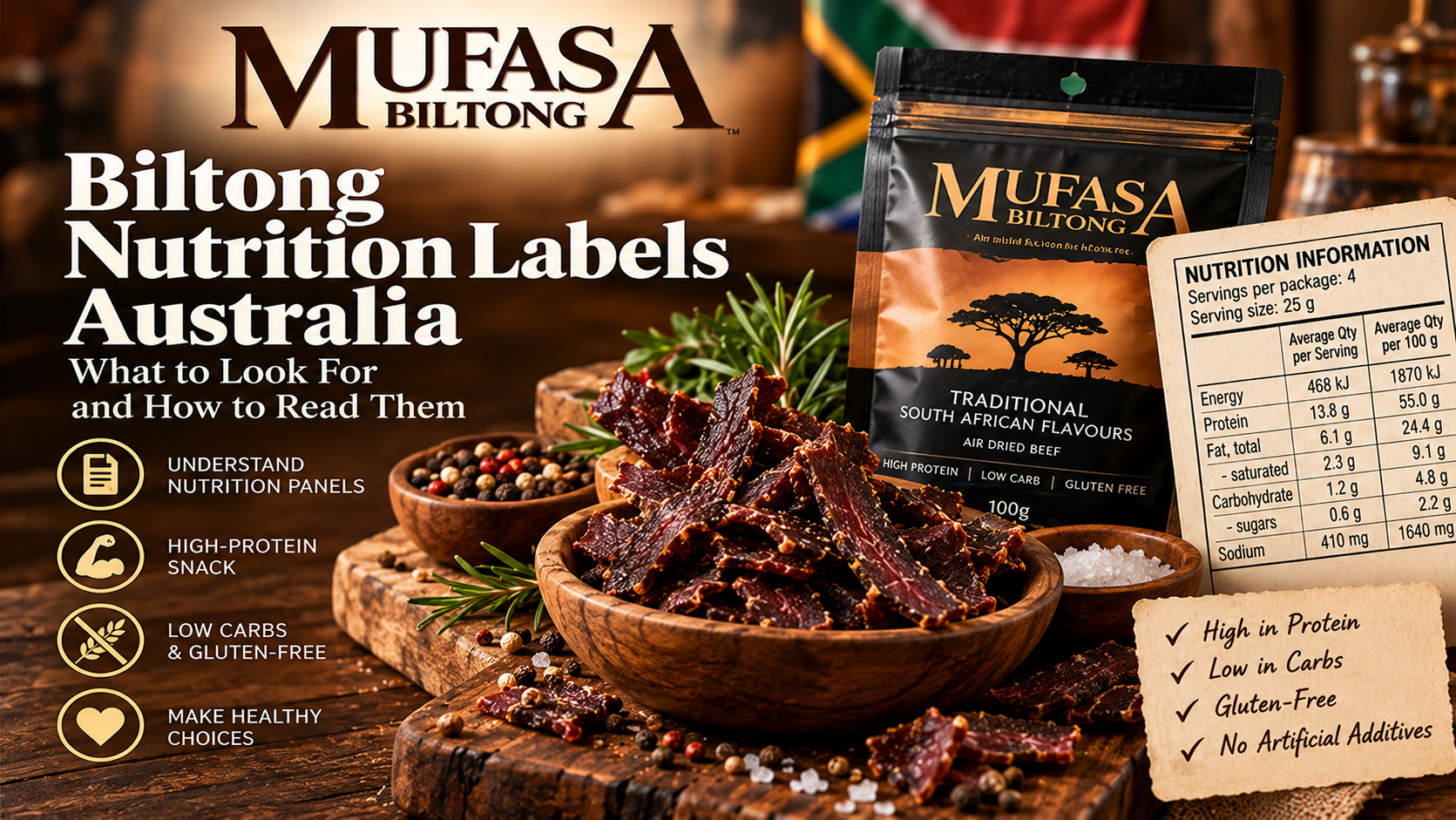
Biltong nutrition labels Australia shoppers see can vary considerably between products. Serving size, protein, sodium, carbohydrates and ingredients all matter when comparing biltong. If you enjoy this traditional South African dried-beef snack, learning how to read the label can help you make a more informed choice.
Biltong is made by curing and air-drying seasoned meat. However, not every product uses the same cut of beef, seasoning blend, preparation method or moisture level. These differences can affect the nutrition information displayed on the packet.
Instead of judging a product by a single number or marketing claim, look at the complete nutrition information panel, ingredient list and storage instructions. This guide explains what to check when shopping for biltong in Australia and how to compare products more fairly.
Understanding biltong nutrition labels Australia shoppers encounter makes it easier to compare similar products using consistent serving sizes and nutrition values.
1. Biltong Nutrition Labels Australia: Start With Serving Size
Serving size is one of the first things to check on biltong nutrition labels. A nutrition panel may display information per serving and per 100 grams. Both figures are useful, but they answer different questions.
The per-serving information helps you estimate what you will consume when eating a particular portion. The per-100-gram column makes it easier to compare products that recommend different serving sizes.
For example, imagine two hypothetical products. One lists its nutrition information for a 25-gram serving, while another uses a 40-gram serving. Comparing only the serving figures could make the products appear more different than they are.
To make a fair comparison, look at their per-100-gram values first. Then consider how much you would realistically eat in one sitting. Checking biltong nutrition labels Australia retailers provide helps you compare serving sizes accurately before choosing a product.
Why serving size matters
Biltong is often sliced into small pieces, making it easy to eat while working, travelling or watching television. However, a handful is not a consistent measurement. The quantity you eat can be larger or smaller than the serving size printed on the packet.
Use these simple habits when comparing biltong:
- Check the serving size stated on each product.
- Compare per-100-gram figures between brands.
- Use the per-serving figures to estimate your actual intake.
- Remember that the number of servings in a packet affects how quickly you finish it.
A kitchen scale can help you understand what a particular serving looks like. You do not need to weigh every snack, but measuring a portion occasionally can make label information easier to interpret.
2. Compare Protein and Energy
Protein is one reason many shoppers choose biltong. Drying removes moisture from meat, so protein can appear concentrated by weight compared with fresh meat. The amount still depends on the product and its formulation.
Check the protein value on the nutrition information panel rather than relying entirely on front-of-pack wording. If you are comparing two products, use the same measurement basis, preferably per 100 grams, before considering the portion you usually eat.
When comparing biltong nutrition labels Australia brands display, check whether the figures are listed per serving or per 100 grams. Using the same measurement makes it easier to compare protein and energy values fairly.
Does more protein automatically mean a better product?
Not necessarily. A product with a higher protein value may suit one person’s preferences, but it does not tell you everything about its sodium content, ingredients, flavour or overall suitability.
Energy is another useful figure. Depending on the product, the energy value can be influenced by the meat cut, fat content, seasoning and moisture level. If you monitor energy intake, compare the kilojoules or calories for a realistic serving rather than looking at the entire packet.
The best comparison considers several values together. Protein, energy, sodium, carbohydrates and serving size provide a more complete picture than any one number alone.
3. Pay Attention to Sodium
Sodium is particularly worth checking when choosing cured or seasoned meat products. Salt is commonly used in biltong preparation, helping develop its characteristic flavour and contributing to the curing process.
Biltong nutrition labels Australia shoppers review may show different sodium levels because recipes, seasoning blends and manufacturing methods vary. Compare the actual figures rather than assuming all biltong products are alike.How to compare sodium levels
Start by comparing the sodium values per 100 grams. Then check the serving size to understand how much sodium you would consume in your usual portion.
For example, if one product contains more sodium per 100 grams than another, its contribution to your intake may also be higher for an equal-weight serving. Your actual intake will depend on the amount you eat.
If you have been advised to limit sodium, check the label carefully and follow advice from your healthcare professional. Do not assume that all biltong has the same salt content simply because it belongs to the same food category.
Also remember that sodium is only one part of the nutrition profile. Consider it alongside protein, energy, ingredients and your individual dietary needs.
4. Check Carbohydrates and Sugars
Carbohydrate content can differ according to the recipe. A traditional-style biltong recipe may use meat, salt, vinegar and spices, while some commercial products may include additional ingredients or seasoning blends.
Marinades, sauces and flavourings can affect the final nutrition information. Therefore, it is best to check the actual packet rather than assume every biltong product contains the same amount of carbohydrate or sugar.
Biltong nutrition labels Australia shoppers compare can reveal differences in carbohydrate values between recipes and flavours.
What should you look for?
Check the total carbohydrate figure and the sugars value, where provided. Review the ingredients list for added sweeteners or ingredients that may contribute to the product’s carbohydrate content.
A product with a lower carbohydrate value may appeal to shoppers who monitor carbohydrate intake. Nevertheless, the complete label matters. Sodium, serving size, ingredients and any relevant dietary requirements should also inform your decision.
If you follow a specific eating plan, compare the nutrition information with that plan’s requirements. Avoid relying on a product description alone when the figures on the packet provide more precise information.
5. Read the Ingredients List
The ingredients list tells you what has been used to make the product. It complements the nutrition information panel by helping you understand the seasoning and other components of the recipe.
Depending on the product, the list may include beef, salt, vinegar, spices and other flavouring ingredients. Recipes differ, so do not assume that a familiar brand or flavour uses the same ingredients across every product.
Reading biltong nutrition labels Australia suppliers publish online can help you identify the ingredients used in a particular product. Always check the physical package as well, because formulations and packaging information may change.
Questions to ask when reading ingredients
Is the recipe simple?
If you prefer a short ingredients list, look for a product that matches that preference. A longer list is not automatically a sign of poor quality, but it gives you more information to consider.
Are there ingredients you prefer to avoid?
Check the list for ingredients that do not suit your preferences or dietary needs. If you have a food allergy or intolerance, read the allergen information carefully and contact the manufacturer if anything is unclear.
Does the product match the claims on its packaging?
Front-of-pack statements can be useful, but the ingredient list and nutrition panel provide important supporting information. Check both before making a decision.
When comparing brands, keep a note of the ingredients you prefer. This can make future shopping quicker and help you choose consistently.
6. Understand Nutrition and Marketing Claims
Words such as “high protein”, “low carbohydrate”, “natural” or “no added sugar” can attract attention on a packet. However, a claim should not replace a review of the nutrition information and ingredients.
A high-protein claim, for example, does not tell you whether a product is higher or lower in sodium than another option. Likewise, a statement about added sugar does not necessarily mean that every carbohydrate-related value is zero.
If a claim influences your purchase, check the supporting information. Where the meaning or eligibility of a nutrition claim is important to you, consult the applicable Australian requirements or ask the manufacturer for clarification.
Be especially careful with dietary claims involving allergies or medical needs. Do not assume that a product is suitable simply because the packaging looks similar to another product you have bought previously.
For guidance on food labelling and nutrition information in Australia, consult the Food Standards Australia New Zealand (FSANZ) website.
7. Compare Biltong Products Fairly
A simple comparison method can help you avoid focusing on one attractive figure while overlooking other relevant details.
Use the following table when assessing different products.
| What to check | Why it matters |
|---|---|
| Serving size | Helps estimate the amount you actually eat |
| Protein per 100 g | Makes protein comparisons more consistent |
| Energy per serving | Helps you assess your usual portion |
| Sodium per 100 g | Makes salt-related comparisons easier |
| Carbohydrates and sugars | Helps you assess the recipe against your preferences |
| Ingredients | Shows the components used in the product |
| Allergen information | Helps identify relevant warnings and dietary concerns |
| Storage instructions | Explains how the product should be handled and stored |
You can also compare price per 100 grams. A larger packet may appear better value, but the cost per 100 grams gives you a more consistent basis for comparing package sizes.
Value is not only about price. Consider whether you like the texture, seasoning and cut, whether the packet suits your needs, and whether you can store it according to the manufacturer’s instructions. A careful review of biltong nutrition labels Australia consumers can access helps make comparisons more useful than relying on front-of-pack claims alone.
8. Check the Packaging and Storage Instructions
Nutrition information is important, but it is not the only detail to review before buying biltong. Look at the packaging, use-by or best-before information where applicable, and storage directions.
Some products may require refrigeration after opening, while others may have different instructions depending on their packaging and production method. Do not assume that every type of dried meat can be stored in the same way.
Follow the directions on the specific packet. If the packaging is damaged, the seal appears compromised or the product has been stored incorrectly, contact the retailer or manufacturer before eating it.
After opening a packet, reseal it as directed and observe any stated refrigeration requirements. If the label provides a specific time limit for consuming the product after opening, follow that guidance.
9. Choose Biltong That Fits Your Needs
There is no single nutrition profile that makes every biltong product the right choice for every shopper. Your priorities may include protein, a preferred seasoning, a particular texture, sodium awareness, ingredient preferences or price.
A practical approach is to identify your main priorities before comparing products. If sodium matters most to you, start there. If you monitor carbohydrates, compare the carbohydrate values and ingredients. If allergies are a concern, check allergen statements and obtain clarification from the manufacturer when needed.
Once you have narrowed down your options, compare the remaining nutrition values and serving sizes. This approach is more useful than selecting a product based on a single claim on the front of the packet.
If you are shopping online, look for a clear product description and current product information. If nutrition details are not available, ask the retailer for the label before making a purchase.
You can explore the range available through Mufasa Biltong and review the information provided for each product before deciding which option best suits your preferences.
Frequently Asked Questions
What should I check first on biltong nutrition labels in Australia?
Start with serving size and the per-100-gram nutrition values. Then compare protein, energy, sodium, carbohydrates, sugars and the ingredients list. Check allergen information and storage instructions where relevant.
Is biltong always high in protein?
Biltong is made from meat, so it commonly provides protein. However, the amount varies by product. Read the nutrition information panel to check the protein content of the specific product you are considering.
Is biltong always low in carbohydrates?
No. Carbohydrate content can vary depending on ingredients and seasoning. Check the total carbohydrate value and ingredients list rather than assuming every product has the same nutritional profile.
Why compare nutrition per 100 grams?
Per-100-gram figures provide a consistent basis for comparing products with different serving sizes. Once you have compared products on that basis, use the serving information to estimate the nutrition in the portion you normally eat.
Does a simple ingredients list mean a product is healthier?
Not automatically. An ingredients list helps you understand what is in the product, but it does not tell you everything about its nutritional profile. Consider the nutrition panel, serving size and your own needs as well.
Where can I find reliable product nutrition information?
Start with the nutrition information panel and ingredients list on the current product packaging. If you are shopping online and the information is missing or unclear, ask the retailer or manufacturer for current details.
Final Checklist Before You Buy
Before choosing a packet of biltong, take a moment to review the serving size, compare nutrition values per 100 grams, check sodium and carbohydrates, read the ingredients list and confirm any relevant allergen information. Finally, follow the storage directions on the packaging.
Understanding biltong nutrition labels Australia shoppers encounter makes product comparisons more straightforward. Rather than relying on a single marketing claim, use the full label to decide whether the product matches your taste, budget and dietary preferences.
Use biltong nutrition labels Australia manufacturers publish alongside the ingredients list to make a more informed product comparison.
By learning how to interpret biltong nutrition labels Australia shoppers can make more informed decisions based on their preferences and the information supplied by each manufacturer. The best way to compare biltong nutrition labels Australia products provide is to review serving size, protein, energy, sodium, carbohydrates and ingredients together. No single number tells the whole story.
Ready to explore your options? Visit Mufasa Biltong to browse the range and review the available product information before choosing your next snack.