
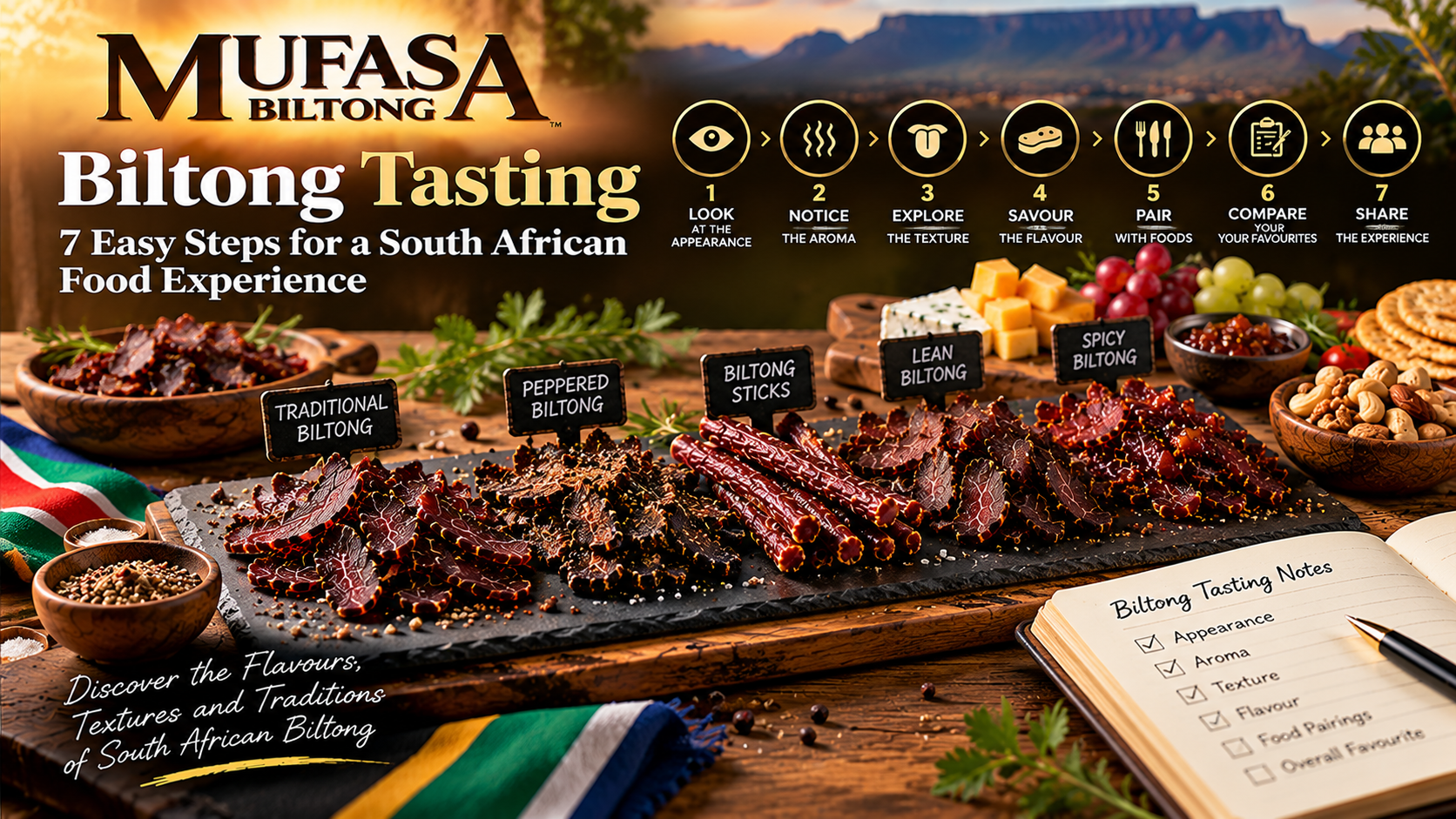
Biltong is more than a convenient snack. It is a South African food tradition with distinctive flavours, textures and seasoning that make every bite worth exploring. Whether you are trying it for the first time or already enjoy it regularly, a little thought can turn an ordinary snack into a memorable biltong tasting experience.
Unlike simply opening a packet and eating a few pieces, tasting biltong gives you the chance to notice its aroma, savoury flavour, texture and seasoning. You can also compare different cuts and discover which styles you enjoy most.
In this guide, we share seven easy steps to help you enjoy biltong tasting at home. From preparing your tasting board to choosing food pairings, these tips will help you appreciate the South African character of this much-loved dried meat snack.
What Makes Biltong Tasting Special?
Biltong has a distinctive place in South African food culture. Traditionally, it is made by curing and air-drying meat, with seasoning contributing to its characteristic taste. Recipes and preparation methods vary, so different biltong products can offer noticeably different experiences.
A proper biltong tasting is about paying attention to those differences. You might notice a peppery finish, a savoury aroma, a firmer bite or a softer texture depending on the product and cut.
It is also an enjoyable way to introduce friends and family to a traditional South African snack. You do not need specialist equipment or complicated preparation. A few varieties, a clean serving board and some complementary foods are enough to get started.
1. Prepare Your Biltong Tasting Selection
The first step is choosing what you want to taste. If you are new to biltong, start with a small selection rather than serving too many varieties at once.
Consider choosing products that offer a contrast in style. For example, you could compare:
- Traditional sliced biltong
- Biltong with a stronger pepper seasoning
- Leaner pieces
- More marbled cuts
- Biltong sticks, if available
The purpose is to notice how each selection differs. A biltong tasting becomes more interesting when you can compare the flavour and texture of different cuts side by side.
Check the product descriptions and packaging before serving. Ingredients, seasoning and storage instructions can vary between products, so use the information supplied by the manufacturer.
For a convenient starting point, explore the range at Mufasa Biltong.
2. Look Closely at the Colour and Appearance
Before taking your first bite, look at the biltong. Its appearance can give you useful clues about the cut, seasoning and preparation.
Notice the colour of the meat, the visible seasoning and the thickness of each piece. Some pieces may have a darker exterior, while others may show a more noticeable contrast between the outside and the centre.
If you are comparing sliced biltong with thicker pieces, look at how the cut changes the appearance. Thin slices may show a different balance of outer seasoning and interior meat compared with a thicker piece.
During biltong tasting, appearance is only one part of the experience. It does not tell you everything about flavour or quality, but taking a moment to observe helps you slow down and appreciate what you are eating.
3. Notice the Aroma Before You Taste
Aroma is an important part of enjoying food. Before tasting a piece, bring it close enough to notice its natural smell without handling it unnecessarily.
Pay attention to the seasoning. Depending on the product, you may notice pepper, spices, vinegar notes or a rich savoury aroma.
Try not to rush this step. Take a moment with each variety and notice whether the aromas seem similar or different.
If you are hosting a biltong tasting session, invite everyone to describe what they notice. People can experience the same food differently, and comparing impressions can make the activity more engaging.
There is no need to use complicated food terminology. Words such as savoury, peppery, mild, rich or spicy are perfectly useful descriptions.
4. Explore the Texture and Cut
Texture can make a significant difference to the way biltong is enjoyed. Some people prefer thin slices that are easy to nibble, while others enjoy thicker pieces that offer a firmer bite.
As you taste each variety, notice:
- Firmness: Does the piece feel soft, firm or chewy?
- Thickness: Is it thinly sliced or cut into larger pieces?
- Bite: Does it break down easily, or does it take longer to chew?
- Surface: Can you notice a coating of seasoning?
These observations help explain why different people have different biltong preferences.
For a useful comparison, taste a thin slice and a thicker piece from the same style of product if both are available. Notice how the cut affects the eating experience.
Texture is one of the most enjoyable parts of biltong tasting because it helps you identify the style you would choose for everyday snacking, sharing or adding to a platter.
5. Savour the Flavour and Seasoning
Now it is time for the main event: tasting the biltong.
Take a small piece and chew slowly. Notice the first impression, the flavour as you continue chewing and the taste that remains afterwards.
Depending on the product, you might notice:
- A savoury, meaty flavour
- Peppery or spicy seasoning
- A mild tang from the preparation
- A rich, lingering finish
- Differences in seasoning intensity
Try one variety at a time. If you are sampling several products, pause between them and have a little water to refresh your palate.
During biltong tasting, avoid deciding too quickly that one style is better than another. A strongly seasoned variety may appeal to someone who enjoys bold flavours, while another person may prefer a milder option.
The most important thing is discovering what you enjoy. There is no single correct way to describe the taste, and personal preference is part of the fun.
6. Pair Biltong With Complementary Foods
Biltong can be enjoyed on its own, but pairing it with other foods creates a more varied tasting experience. Choose accompaniments that complement its savoury character without overwhelming it.
Here are some easy options:
Cheese: Mild cheeses can provide a creamy contrast to savoury biltong. Try cheddar or another favourite cheese cut into small portions.
Crackers: Plain crackers add crunch and make it easy to build small tasting bites.
Fresh fruit: Grapes, apple slices and berries can introduce a sweet, refreshing contrast.
Nuts: Almonds, cashews and other nuts offer crunch and a different flavour profile.
Olives and pickles: These bring tangy, salty flavours to the board. Serve them in small portions so they do not dominate the tasting.
Chutney: A little fruit chutney can add sweetness and spice alongside the meat.
For a relaxed biltong tasting board, arrange the biltong in the centre and place the accompaniments around it. Keep the portions small so guests can try different combinations.
You can find more serving inspiration in our guide to what to serve with biltong.
7. Compare Your Favourites and Make Notes
The final step is deciding which styles you enjoyed most. This is especially useful if you are trying several varieties or introducing biltong to people who have never tasted it before.
You do not need a formal scorecard, but a few simple notes can help you remember your preferences.
Consider rating each variety for:
- Overall flavour
- Seasoning intensity
- Texture
- Firmness
- Preferred way to serve it
You could also ask everyone to choose their favourite piece and explain why they liked it.
A biltong tasting session is not about finding a universal winner. It is about discovering personal preferences and enjoying the differences between products.
If you repeat the experience with another selection, you may find that your preferences change as you become familiar with different cuts and seasonings.
Tips for Hosting a South African-Inspired Biltong Tasting
Want to make your tasting session feel like a special occasion? Keep the preparation simple and focus on creating a welcoming atmosphere.
Keep the selection manageable. Three or four varieties are usually enough for a relaxed comparison. Too many choices can make it difficult to notice individual differences.
Label each variety. Small cards can identify the product or cut, making it easier for guests to compare what they are eating.
Serve accompaniments separately. Keep cheese, fruit, crackers and chutney in their own sections so guests can try biltong on its own before combining flavours.
Offer water. Water gives guests a simple way to refresh their palate between samples.
Check dietary needs. Review ingredient and allergen information on product packaging, and ask guests about dietary requirements before preparing the board.
Follow storage instructions. Keep products in their original packaging until needed where practical, and follow the manufacturer’s storage and handling directions. Do not leave perishable accompaniments sitting out longer than appropriate.
A little planning makes biltong tasting easy to enjoy, whether you are sharing it with two friends or preparing a larger South African-inspired snack board.
Frequently Asked Questions About Biltong Tasting
What is biltong tasting?
Biltong tasting is the process of sampling biltong while paying attention to its appearance, aroma, flavour, seasoning and texture. It can be done casually at home or as part of a shared tasting board.
How many biltong varieties should I taste?
Three or four varieties are a practical starting point. This gives you enough choice to compare different cuts or seasoning styles without making the session feel overwhelming.
What should I eat with biltong?
Cheese, crackers, fresh fruit, nuts, olives and chutney are popular accompaniments. Choose a few options that complement the savoury flavour of the biltong.
Should biltong be served cold or at room temperature?
Follow the storage and serving guidance on the product packaging. If the manufacturer recommends refrigeration, keep the product refrigerated and only serve the amount you plan to eat.
Is biltong tasting suitable for beginners?
Yes. Beginners can start with a small selection and focus on simple observations such as flavour, seasoning and texture. There is no specialist knowledge required.
How do I choose biltong I will enjoy?
Try different cuts and seasoning styles in small quantities. Pay attention to whether you prefer a firmer or softer bite and mild or stronger seasoning. Product descriptions and ingredient labels can also help you compare options.
Enjoy the South African Experience With Mufasa Biltong
Biltong offers a distinctive way to enjoy South African food culture, whether you are discovering it for the first time or already have a favourite style.
With these seven steps, biltong tasting can become more than a quick snack. You can explore appearance, aroma, texture and seasoning, experiment with food pairings and share the experience with friends and family.
Start with a small selection, take your time and enjoy discovering the flavours you like best.
Explore the range at Mufasa Biltong and bring a taste of South Africa to your next snack board.
For general information about food labelling and safe food handling, consult Food Standards Australia New Zealand.