
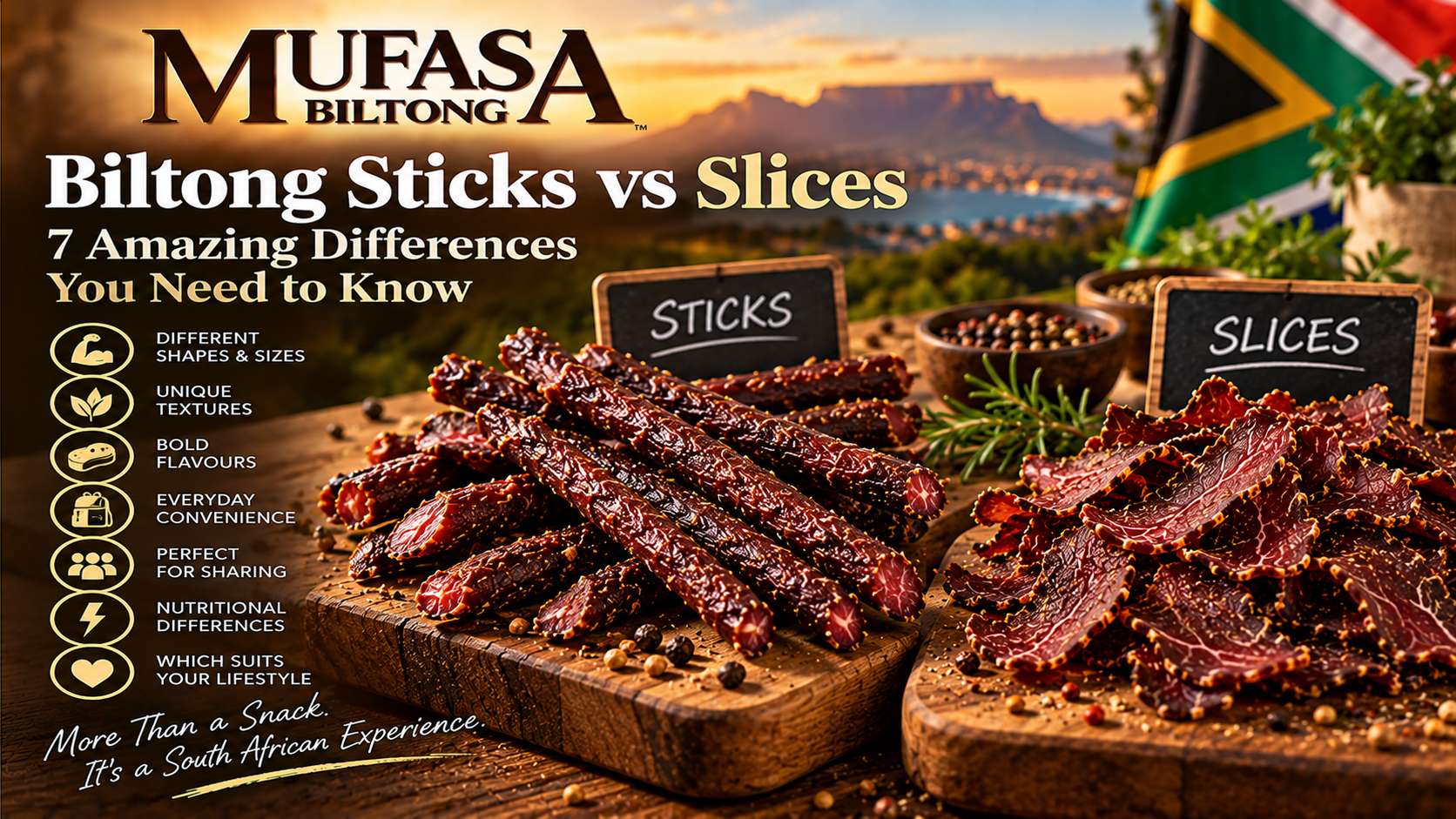
When choosing your favourite South African dried meat snack, the format can make a bigger difference than you might expect. Biltong sticks vs slices is a common consideration for shoppers who want to enjoy biltong at home, take it to work or pack something savoury for a day out.
Both formats offer the distinctive taste of seasoned dried meat, but they provide different eating experiences. Biltong sticks are convenient, easy to portion and suited to casual snacking. Sliced biltong offers a different texture and can be easier to serve alongside cheese, crackers and other foods.
So, which option is right for you? The answer depends on how you prefer to eat biltong, the texture you enjoy and the occasions when you plan to serve it.
In this guide, we explore seven useful differences between biltong sticks and slices to help you make a more informed choice. These biltong sticks vs slices differences can help you choose a snack that fits your daily routine.
Biltong Sticks vs Slices: What Is the Difference?
The main difference between biltong sticks and slices is their shape, thickness and serving format. Both are forms of dried meat, but they are cut differently and can feel quite different when eaten.
Biltong sticks are generally narrow, elongated pieces that are easy to pick up and enjoy individually. They are often suitable for people who prefer a snack that does not require cutting or additional preparation.
Sliced biltong consists of thinner pieces cut from dried meat. Depending on the cut and drying process, slices may be softer, firmer, leaner or more substantial. They are versatile for snacking and serving on a grazing board.
Neither format is automatically better. Understanding the differences can help you choose the option that suits your preferences.
1. Shape and Size: Convenient Sticks or Versatile Slices?
The most obvious difference is the way each format is cut.
Biltong sticks are usually long and narrow. Their shape makes them straightforward to handle, and they can be eaten individually without needing a plate or knife.
Sliced biltong is cut into smaller, flatter pieces. This makes it easy to arrange on a plate, combine with other foods or serve as part of a larger snack selection. When comparing biltong sticks vs slices, the shape can influence how easily you portion and enjoy your snack.
Think about how you usually enjoy dried meat:
- Sticks: Useful when you want a ready-to-eat individual piece.
- Slices: Convenient when you want smaller portions or plan to share.
- Both: Suitable for people who enjoy variety and want different formats available.
When comparing biltong sticks vs slices, consider where you will eat them. Sticks can be practical for informal snacking, while slices offer flexibility when preparing food for other people.
2. Texture: A Different Bite for Every Preference
Texture is one of the biggest factors influencing which biltong format people prefer.
Biltong sticks can provide a firm, substantial bite. Their thickness means you may need to chew them for longer, depending on the product and how dry it is.
Sliced biltong offers a different experience. Thinner pieces can be easier to bite and portion, although the texture still depends on the meat cut, moisture level and drying method.
Some people prefer the more substantial feel of a stick, while others enjoy the flexibility of smaller slices.
It is worth remembering that shape alone does not determine tenderness. A thick stick is not necessarily tougher than a slice, and a thin slice is not always softer. The meat used and the way the product is prepared are important factors.
If texture matters to you, check the product description and try different varieties to discover what you enjoy most. The biltong sticks vs slices choice often comes down to whether you prefer a firm bite or thinner pieces.
3. Flavour: Does the Format Change the Taste?
Biltong sticks and slices can share the same seasoning profile, but their shape and thickness may influence how you experience the flavour.
A stick gives you a larger piece to chew, allowing you to experience the meat and seasoning over several bites. A slice offers a smaller portion, which can make it easier to enjoy biltong alongside other flavours.
Seasoning is generally influenced by the recipe rather than the format. Traditional biltong may feature ingredients such as salt, vinegar, pepper and coriander. Other varieties may include additional spices or flavour combinations.
When exploring biltong sticks vs slices, compare the actual product ingredients rather than assuming that one format has a stronger flavour.
For example, a pepper-seasoned stick may taste more intense than a mild sliced variety, but that difference comes from the recipe, not simply from being a stick.
If you enjoy experimenting, try different Mufasa Biltong flavours and see which combinations suit your preferences.
4. Convenience: Which Is Easier for Everyday Snacking?
Convenience is often the deciding factor for shoppers. Biltong sticks vs slices also matters when preparing food for guests or building a grazing platter.
Biltong sticks are designed in a format that is easy to pick up and eat. They can be useful for snack breaks, road trips and other occasions when you want something simple.
Sliced biltong can be just as convenient, especially when it is already packaged in ready-to-eat portions. It is also easy to place in a bowl or lunch container.
Here are some practical considerations:
For work: Either format can fit into a snack routine. Choose a suitable sealed pack and follow the storage instructions.
For travel: Sticks can be easy to handle while travelling, while slices can be packed into a suitable container for convenient portions.
For home: Slices are useful when you want to serve biltong with other snacks. Sticks work well when you simply want to enjoy a piece on its own.
For outdoor activities: Both formats may suit picnics, camping and day trips, provided they are stored and handled according to their packaging instructions.
The best choice is the one that fits comfortably into your daily routine. For busy days, biltong sticks vs slices offer two convenient ways to enjoy a savoury snack.
5. Serving Styles: Individual Snacks or Sharing Platters?
How you plan to serve biltong can help determine the right format.
Biltong sticks are particularly suitable for individual servings. You can place them in a snack bowl, pack them into a lunch container or serve them alongside other finger foods.
Sliced biltong is especially versatile for entertaining. Its shape makes it easy to arrange with cheese, crackers, olives, fruit and chutney.
For a simple grazing board, try combining sliced biltong with:
- Mature cheddar or gouda.
- Seeded crackers and crispbreads.
- Grapes, apple slices or dried fruit.
- Olives and pickles.
- A small bowl of chutney.
You can also serve sticks alongside the slices to give guests more variety.
If you are preparing a platter for a gathering, keep the different biltong formats in separate sections. This makes the board easier to navigate and helps guests choose what they prefer.
For more inspiration, explore our guide to biltong platter ideas, and discover ways to combine South African flavours with familiar grazing-board favourites.
6. Portion Control: Choosing the Right Amount
Portion size is another practical difference worth considering.
Biltong sticks are often individually shaped, which can make it easier to decide how many pieces you want to serve. Sliced biltong can be portioned by weight or by the number of slices.
However, the actual serving size depends on the product. A large stick may contain more meat than several thin slices, so counting pieces is not a reliable way to compare quantities.
If you are monitoring your food intake, use the nutrition panel and serving information on the packaging.
Pay attention to:
- The stated serving size.
- Energy per serving and per 100g.
- Protein content.
- Total fat and saturated fat.
- Sodium content.
When comparing biltong sticks vs slices, use the same weight as your reference point. This gives you a more meaningful comparison than simply counting pieces.
It is also useful to remember that biltong is a dried meat product, so its nutritional values can be concentrated compared with fresh meat. Check the actual product label rather than relying on general estimates.
7. Price and Value: Compare More Than the Pack Size
Price can influence your choice, particularly if you enjoy biltong regularly. Comparing biltong sticks vs slices by price per 100g can help you make a more informed buying decision.
A pack of sticks may contain a different quantity from a pack of slices. Packaging size, meat cut, flavour and production methods can all affect the price.
Rather than comparing the shelf price alone, look at the cost per 100g. This makes it easier to compare products of different sizes.
For example, a smaller pack may appear less expensive, but it could cost more per 100g than a larger pack. Equally, a larger pack is not automatically better value if you are unlikely to use it before its recommended storage period.
Consider these points when comparing products:
- Check the net weight of each pack.
- Compare prices per 100g.
- Review the ingredient list and product description.
- Consider how quickly you expect to enjoy the product.
- Follow the packaging instructions for storage after opening.
The best value is not always the cheapest option. It is the product that gives you the format, flavour and quantity you actually want.
Are Biltong Sticks or Slices Better for You?
There is no universal nutritional winner between the two formats. Both are dried meat products, and their nutritional profiles depend on the meat, ingredients, fat content and preparation method.
A stick is not automatically higher in protein or lower in fat than a slice. If the two products use similar meat and recipes, their nutritional values may be broadly comparable per 100g.
The most useful approach is to compare the labels of the specific products you are considering.
If you have dietary requirements, check the ingredient list for allergens, added ingredients and seasoning components. You can also consult the Food Standards Australia New Zealand food labelling guide for general information about reading packaged food labels.
Frequently Asked Questions
Are biltong sticks the same as sliced biltong?
They are both forms of dried meat, but they are cut into different shapes. Sticks are generally long and narrow, while sliced biltong is cut into thinner pieces. The texture and serving experience can therefore differ.
Are biltong sticks tougher than slices?
Not necessarily. Texture depends on the meat cut, thickness, moisture level and drying process. Some sticks are firm and chewy, while other products may be more tender.
Which is better for lunchboxes, biltong sticks or slices?
Both can be convenient. Sticks are easy to handle individually, while slices can be portioned into a suitable container. Always follow the product’s storage instructions, particularly when packing food for later consumption.
Which format is better for a grazing platter?
Sliced biltong is often easier to arrange with cheese, crackers, fruit and other accompaniments. Sticks can also be included as an additional option for guests who prefer individual pieces.
Do biltong sticks and slices have the same nutritional value?
Not always. Nutritional values depend on the recipe, meat cut, fat content and moisture level. Compare the nutrition panels per 100g for an accurate product-to-product comparison.
How should I store biltong sticks and slices?
Follow the storage directions printed on the packaging. Different biltong products may have different storage requirements, so avoid assuming that sticks and slices should always be stored in the same way.
Find Your Favourite Biltong Format With Mufasa
Choosing between sticks and slices comes down to how you enjoy your biltong. Sticks offer a convenient, substantial snack, while slices provide flexibility for everyday eating, sharing and entertaining.
Understanding biltong sticks vs slices makes it easier to choose a format that suits your routine, serving preferences and taste.
You do not have to limit yourself to one option. Keeping both formats available can give you more flexibility, whether you are planning a snack break, preparing a grazing board or enjoying a taste of South African food at home.
Explore the range at Mufasa Biltong and discover a biltong option that suits your next snack.