Gluten-Free Biltong: What Australian Buyers Should Check
If you are looking for gluten-free biltong, checking the exact product information is essential. Although beef itself does not naturally contain gluten, the ingredients, seasonings and manufacturing processes used for a finished product can affect whether it is suitable for someone avoiding gluten.
Biltong is a dried meat snack traditionally prepared with meat, salt, vinegar and spices. Commercial products may use different recipes, so it is important not to assume every variety is gluten-free. In this guide, we explain how to read product labels, check allergen information and ask the right questions before buying biltong in Australia.
Gluten-Free Biltong: 7 Important Checks Before You Buy
1. Read the complete ingredients list
Start with the ingredients list on the current package or product listing. Check seasonings, marinades, flavourings and any ingredients beyond the basic meat and spices. If you do not recognise an ingredient, do not guess whether it contains gluten. Ask the manufacturer or retailer for information about the exact product and flavour.
2. Check allergen and precautionary statements
Read allergen declarations and precautionary statements carefully. These can help you understand what the manufacturer declares about allergens and potential cross-contact. If you have coeliac disease or need strict gluten avoidance, contact the manufacturer when the label does not answer your questions.
3. Check every flavour separately
A plain variety and a chilli, barbecue or other seasoned variety may use different ingredients. Never assume that a statement about one product applies to an entire range. Check the exact flavour and pack you intend to buy.
4. Verify gluten-free claims
Words such as natural, high-protein or low-carbohydrate do not establish that a product is gluten-free. Look for a clear claim that applies to the exact product, and seek manufacturer confirmation if you need more certainty.
5. Ask about cross-contact
Ingredients are only one consideration. Manufacturing equipment, preparation areas and handling practices may also matter to people who must strictly avoid gluten. Ask the manufacturer what information it can provide about its production controls and possible cross-contact.
6. Review online product information
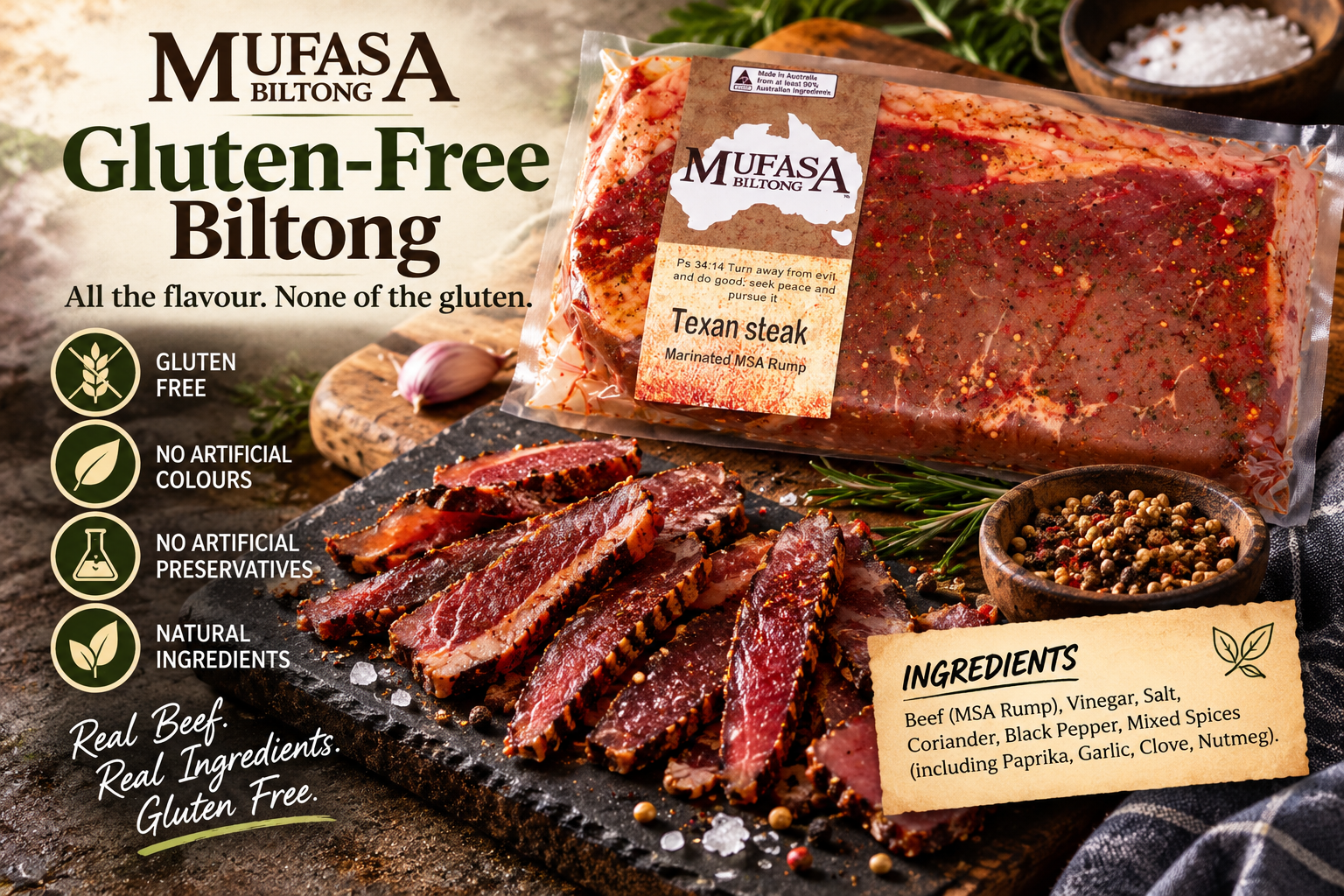
When shopping online, make sure the listing provides enough detail to identify the current product. A front-of-pack photo may not show all ingredients or allergen statements. Request a readable label image or ask the retailer for current information if necessary.
7. Recheck the label when you buy again
Packaging and recipes can change. Check each new pack rather than relying solely on information from a previous purchase. This is particularly important if the flavour, packaging or product description has changed.
Does Gluten-Free Mean Healthier?
Not necessarily. Gluten-free status addresses whether a food is suitable for avoiding gluten; it does not automatically tell you about its sodium, protein, energy, fat or carbohydrate content. If those values matter to you, compare the nutrition information panel and serving size as well.
Biltong products can differ in their salt content and seasoning. Review the label for the exact product rather than assuming all varieties have the same nutritional profile.
For Australian food labelling information, visit Food Standards Australia New Zealand.
Frequently Asked Questions
Is all beef biltong gluten-free?
No. Beef itself does not naturally contain gluten, but added ingredients and manufacturing practices can affect the finished product. Check the exact product information.
Can people with coeliac disease eat biltong?
That depends on the exact product and whether its ingredients and handling meet their needs. Read the label and contact the manufacturer about cross-contact if information is unclear.
Does gluten-free biltong contain carbohydrates?
It can. Gluten status and carbohydrate content are different considerations, so check the nutrition panel.
Can I rely on a product photo?
Not always. A photo may not show the complete or current label. Ask the seller for full product information if you need to verify ingredients or allergen statements.
Make an Informed Choice
Choosing gluten-free biltong starts with checking the exact product rather than relying on general assumptions. Review the ingredients, allergen information and any gluten-free claim, and ask the manufacturer for clarification when necessary.
You can explore products at Mufasa Biltong, but confirm the current ingredients and gluten status of the specific product directly before buying if gluten avoidance is essential.